Exceptional cheese from the North of England
Shepherds Purse Cheese
From a family farm near Thirsk, Shepherds Purse is one of Yorkshire’s great cheesemaking success stories. It began in the late 1980s when Judy Bell started experimenting with sheep’s milk, initially looking for alternatives for people unable to enjoy cow’s milk products. What began as farm diversification developed into an award-winning family cheesemaking business.
Judy won the company’s first gold award with Olde York in 1989, and innovation has remained at the heart of Shepherds Purse ever since. In 1995, the family brought blue cheesemaking back to Yorkshire with Yorkshire Blue and Mrs Bell’s Blue, later adding cheeses made with cow’s, sheep’s and even water buffalo milk.
Today, Judy’s daughters Katie and Caroline continue the family story, leading a team of artisan cheesemakers at Leachfield Grange. Fresh milk arrives from local farms, and the cheeses are still made with a hands-on approach — salting, turning, grading and wrapping with the care expected of a true artisan producer.
Cheeses to discover: Yorkshire Blue, Organic Yorkshire Blue, Harrogate Blue, Mrs Bell’s Blue, Mrs Bell’s Salad Cheese, Bluemin White


Swaledale Cheese — Yorkshire Dales
The story of Swaledale cheese reaches back almost a thousand years. Its origins are associated with Cistercian monks who brought their cheesemaking knowledge to the Dale, with recipes and techniques subsequently passed between generations of local farming families.
By 1980, however, traditional Swaledale cheesemaking had almost disappeared. When the last remaining farm stopped production, Marjorie Longstaff entrusted the traditional process to the founders of the Swaledale Cheese Company, allowing production to be revived in 1987.
Today, Swaledale Cheese remains a custodian of this remarkable piece of Yorkshire food heritage. Local milk, small-batch production and traditional methods produce cheeses that reflect the landscape from which they come.
It is precisely the type of cheese we love at Cryer & Stott: regional, distinctive and made with a genuine story behind it.
Cheeses to discover: Swaledale Farmhouse, Swaledale Blue and Swaledale Smoked.
Wensleydale Creamery — Hawes, Yorkshire Dales
Few cheeses are as closely connected to their landscape as Yorkshire Wensleydale. Cheesemaking in Wensleydale can trace its heritage back to Cistercian monks, with generations of Dales farmers and cheesemakers carrying that knowledge forward.
At the heart of that story today is Wensleydale Creamery in Hawes — custodian of centuries of cheesemaking heritage and the only producer of PGI-certified Yorkshire Wensleydale. The Creamery sources milk from local farms surrounding the Dale, supporting the rural economy as well as protecting one of Yorkshire’s best-known food traditions.
That provenance can be tasted in the cheese itself: traditionally creamy, crumbly and fresh, with the gentle acidity that makes Yorkshire Wensleydale so distinctive.
For us, Wensleydale isn't simply a style of cheese. It is a product intrinsically connected to the farmers, landscape and cheesemaking heritage of the Yorkshire Dales.
Cheeses to discover: Yorkshire Wensleydale and the Creamery's traditional and blended cheeses.

Curlew Dairy — Wensleydale
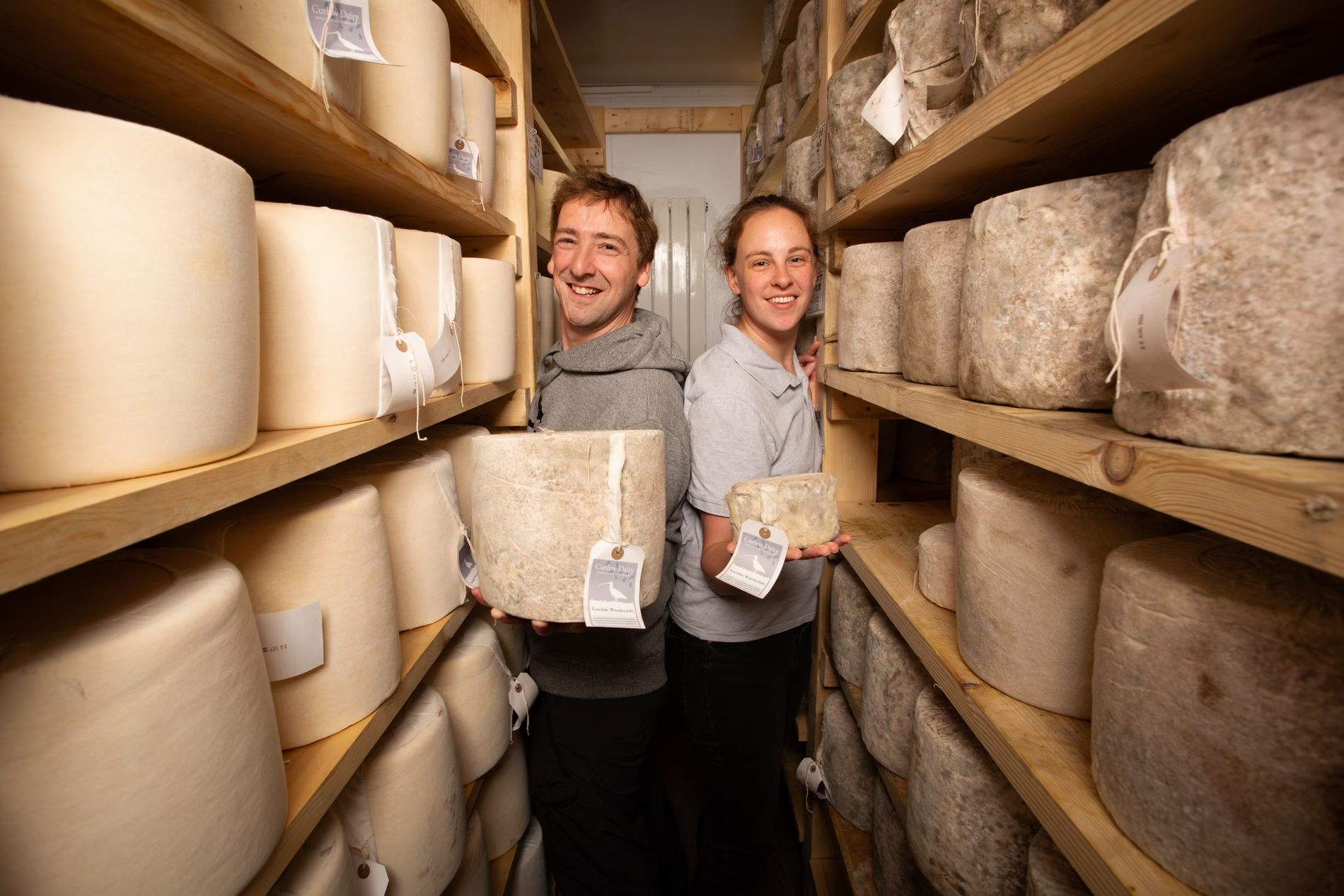
Curlew Dairy is helping bring a piece of Yorkshire Dales cheesemaking history back to life.
From its micro-dairy at East House Farm in Carperby, in the heart of Wensleydale, Curlew produces farmhouse cheese using a historic Dales recipe and raw milk sourced from a small local farm.
Its Yoredale Wensleydale is a wonderful expression of place. By working with unpasteurised milk, the dairy allows the character of the farm, pasture and seasons to become part of the finished cheese — the idea of terroir more often associated with wine.
Small-scale, traditional and firmly rooted in its surroundings, Curlew represents an exciting new chapter in an old Yorkshire story.
Cheeses to discover: Yoredale Wensleydale, Yoredale Blue
Botton Creamery — North York Moors
Hidden away in beautiful Danby Dale in the North York Moors, Botton Creamery is about far more than making exceptional cheese.
Botton Village is part of Camphill Village Trust, where adults with learning disabilities live and work as part of a community. Its organic farms and creamery work together, providing meaningful work experience while helping generate income for the charity.
Milk comes from Botton's small herd of Ayrshire and Dairy Shorthorn cows, prized for their rich, creamy milk. It is transformed at the village creamery into raw-milk cheeses which are matured on site.
The result is cheese with exceptional provenance: organic milk, traditional production, a remarkable North Yorkshire location and a creamery with genuine social purpose.
Cheeses to discover: Dale End Cheddar, Moorland Tomme, Summerfields


Northumberland Cheese Company — Blagdon
Northumberland Cheese Company began in wonderfully modest fashion: with sheep farmer Marc Robertson, a cheese press, two moulds and his first batch of sheep's milk cheese made in a bucket in his farmhouse kitchen sink.
That was in 1984. Marc wanted to diversify his farm and, after learning more about milk and cheesemaking — including travelling to Holland — began developing his craft. What started as Redesdale Sheep Dairy gradually expanded from sheep's milk into cow's and goat's milk cheeses.
In 1996 the business moved to a 19th-century granary on the Blagdon Estate and became Northumberland Cheese Company.
Traditional craftsmanship remains central to the business today, alongside an emphasis on milk provenance and traceability back to the farms supplying it.
Cheeses to discover: Northumberland Original, Northumberland Nettle and Northumberland Oak-Smoked
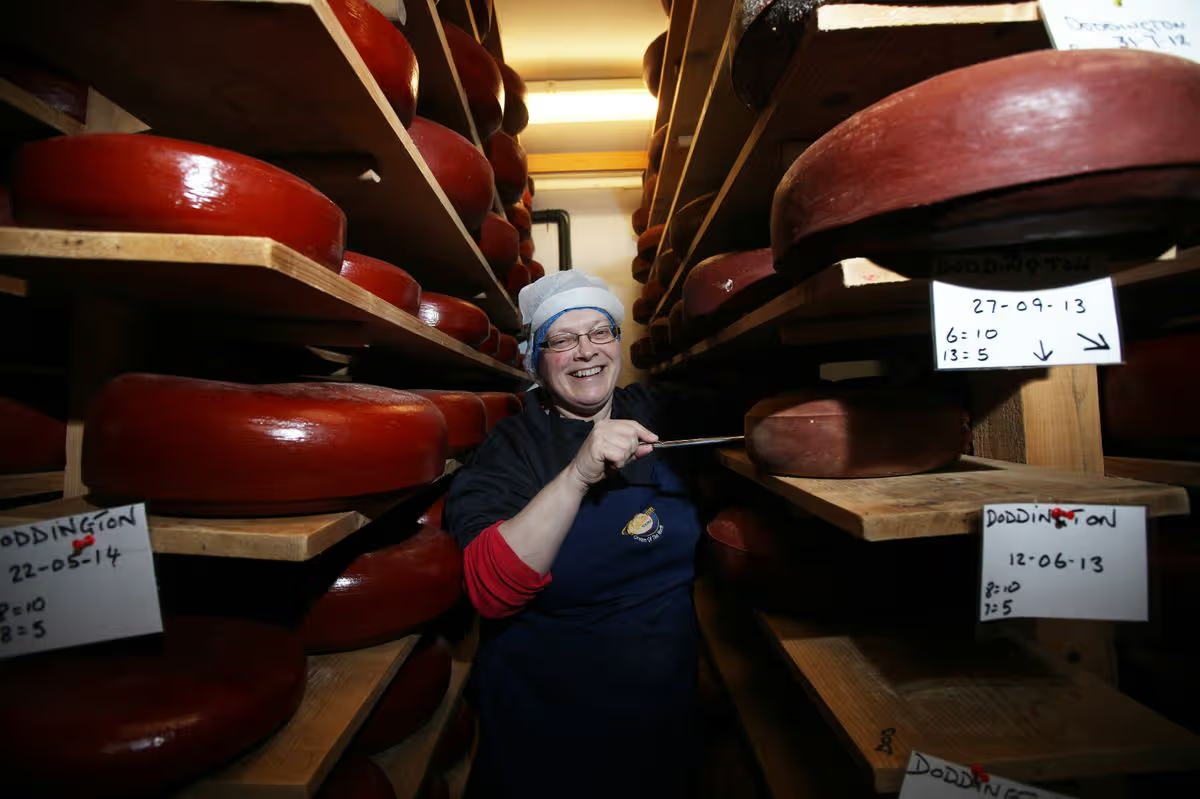
Doddington Dairy — Northumberland
At North Doddington Farm, cheesemaking is part of a much longer family dairy story.
The Maxwell family's connection with dairy farming stretches back generations. Their grandmother attended dairy school to learn cheesemaking during the First World War, while Malcolm Maxwell brought his cows from Dumfriesshire to Doddington in 1950. The family has milked cows there ever since.
Traditional family cheesemaking was revived in 1992 after research, training and trips to European cheesemakers. Old stone farm buildings were converted, traditional equipment gathered and a new generation of Doddington cheeses was born.
The family's Friesian and Ayrshire-cross cows graze the pastures of the Glendale Valley beneath the Cheviot Hills, with their milk travelling only a short distance from herd to dairy.
It is genuine farmstead production: the land, animals, milk and cheesemaking all connected.
Cheeses to discover: Doddington, Darling Blue, Berwick Edge, Cuddy's Cave, Smoked Cuddy's Cave, Admiral Collingwood

Yorkshire Dama Cheese — West Yorkshire
Yorkshire Dama is one of the most remarkable stories in modern British cheesemaking.
Founder Razan Alsous arrived in the UK from Syria in 2012 with her husband and three young children after the family had lost almost everything to war. Despite having a pharmacy degree and scientific background, establishing a career in Britain proved difficult.
Razan began looking at the resources around her. Yorkshire had exceptional milk; she had grown up with the flavours and food traditions of the Middle East. Bringing the two together led to Yorkshire Dama Cheese.
Her Mediterranean-inspired cheeses made with Yorkshire milk have since become multi-award-winning products and a brilliant example of how Britain's cheese culture continues to evolve — new ideas and traditions becoming part of Yorkshire's own food story.
It's a producer we're particularly proud to champion: Yorkshire provenance with a completely different heritage behind it.
Cheeses to discover: Yorkshire Dama Squeaky Cheese
Ribblesdale Cheese — Hawes
Ribblesdale Cheese has the sort of origin story we couldn't possibly make up.
In 1978, founder Iain Hill's mother gave him some money and instructed him to "do something useful" with it. He came home with two nanny goats — Victoria and Maud, named after his mother, Victoria Maud Hill. She was apparently less than impressed.
The goats were in kid, the herd grew, and a conversation with the local vet about what to do with the excess milk led Iain towards cheesemaking.
When Iain died in 2006, his niece Iona took on the family business. Coming from a finance background rather than cheesemaking, she learned the craft and eventually established a new dairy in Hawes.
Ribblesdale remains genuinely artisan. Milk is stirred by hand, curd cut and shovelled by hand and cheeses made slowly in small batches, with judgement and experience taking precedence over push-button machinery.
Goat's milk cheese remains the speciality and represents the majority of production.
Cheeses to discover: Ribblesdale Original Goat, Ribblesdale Superior, Ribblesdale Blue, Ribblesdale with Honey & Flowers


Appleby Creamery — Cumbria
Handmade Cumbrian cheese from the heart of the Eden Valley.
Nestled in Appleby-in-Westmorland, on the edge of the Lake District, Appleby Creamery has been creating distinctive artisan cheese since 2007. The creamery was established by experienced cheesemakers determined to continue the tradition of cheesemaking in Appleby, and that knowledge and craftsmanship still sits at the heart of the dairy today.
The creamery produces an impressively varied collection of cheeses, from rich blues and creamy bries to traditional hard and Caerphilly-style cheeses. Everything is made in small batches, with a focus on quality milk, traditional skills and plenty of hands-on cheesemaking.
Provenance is important here too. Cow's milk is sourced from farms within Cumbria, while the goat's milk travels less than eight miles from the family-run Meaburn Hall Farm. It's a close relationship between farmers and cheesemakers that keeps the supply chain local and gives the creamery real connection to its Cumbrian surroundings.
Appleby also isn't afraid to experiment. Alongside traditional styles, the team has developed smoked cheeses and Mediterranean-inspired varieties, combining established cheesemaking skills with new ideas. Sustainability is becoming increasingly important too, with solar panels installed across the creamery roof and a move towards electricity for pasteurisation and water heating.
From the Creamery: British Grilling Barrel
Larkton Hall Cheese — Cheshire
A little taste of the Italian Alps handmade on a Cheshire dairy farm.
Based at Larkton Hall Farm near Malpas, nestled in the Bickerton Hills, Larkton Hall Cheese combines Cheshire milk with traditional Italian cheesemaking techniques. The cheeses are handmade on the farm by Anne Clayton using milk from the family's own dairy herd.
Anne's route into cheesemaking is a brilliant part of the story. After living in Italy for 17 years, she returned to Cheshire with her husband, whose family had farmed in the area for generations. Missing the Italian cheeses she'd grown to love, Anne took a cheesemaking course at Reaseheath College — but English-style cheesemaking wasn't quite what she was looking for.
So, she called on her friend Benny, an Italian cheesemaker, who travelled to Cheshire and spent a month making cheese alongside her every day, teaching Anne traditional Alpine-style methods. He still returns to check on her cheesemaking — a wonderful link between Italian tradition and this very English dairy farm.
Today, milk from the farm's predominantly Holstein-Friesian herd is transformed into cheese in traditional copper vats. The cheeses are made with the farm's own unpasteurised cow's milk, individually brined and matured on wooden boards, developing their own natural rinds as they age. The cows graze outside during the spring and summer, with the farm placing particular emphasis on producing milk from forage.
The result is something quite different from the traditional cheeses normally associated with Cheshire: artisan British cheese with a distinctly Italian soul.
Cheeses to discover: Crabtree & Federia


Lincolnshire Poacher Cheese — Lincolnshire
From one small vat to one of Britain’s most distinctive farmhouse cheeses.
On the edge of the Lincolnshire Wolds, just ten miles from the east coast, the Jones family has farmed at Ulceby Grange since 1917. Today, brothers Simon and Tim Jones continue that family tradition, producing Lincolnshire Poacher using milk from their own dairy herd and traditional cheesemaking methods.
The cheese story began in 1992 when fourth-generation farmer Simon returned from agricultural college looking for a new direction on the family farm. After attending a cheesemaking course at Reaseheath College and visiting dairies around the South West, he enlisted the help of Welsh cheesemaker Dougal Campbell. Armed with a bottle of rennet, some starter culture and Dougal's guidance, Simon made his first batch of cheese in February 1992.
It proved rather popular. In fact, demand was initially so strong that customers at a local cheese shop were reportedly restricted to just a quarter of a pound each. A larger dairy followed in 1995, and Simon's brother Tim joined the business in 2000. Today, almost all of the milk produced on the farm is transformed into cheese.
Lincolnshire Poacher itself sits somewhere between a traditional West Country Cheddar and a continental Alpine cheese such as Comté. Made from the farm's own unpasteurised cow's milk, the curd is worked by hand before the cheeses are pressed and matured on wooden shelves. Each batch is tasted at around 12 months to decide how it should develop, meaning patience and the cheesemaker's judgement remain a fundamental part of the process.
The farm also takes its environmental responsibilities seriously. Renewable energy projects include wind and solar power, alongside a straw-pellet boiler and ground-source heating, while the Jones family works to minimise chemical use and encourage wildlife across the farm.
It's a brilliant example of British farmhouse cheesemaking: the cows, land, milk and dairy all connected, with a cheese that genuinely reflects where it comes from.
Cheese to discover: Lincolnshire Poacher, Vintage Lincolnshire Poacher and Smoked Lincolnshire Poacher.
Butlers Farmhouse Cheeses — Lancashire
Four generations of family cheesemaking, proudly rooted in rural Lancashire.
Butlers Farmhouse Cheeses began in 1932, when Richard and Annie Butler started making Lancashire cheese in their family kitchen. More than 90 years later, the business remains independent and family-run, with the fourth generation now continuing a cheesemaking story built around family recipes, traditional skills and Lancashire milk.
Each generation has added something of its own. Richard and Annie began the story, Jean and Tom developed it, Gill and Colin grew the business further, and today Matthew and Daniel represent the fourth generation. Yet traditional farmhouse cheesemaking remains at the heart of what Butlers does.
Provenance is particularly important. Butlers makes its cheeses at its rural Lancashire dairy using milk from its own family herd and nearby farms, with milk sourced within just a few miles of the dairy. The surrounding Lancashire landscape — its famously plentiful rain, rich grass and dairy farming heritage — is considered an important part of the character of the cheese.
While tradition runs through the business, Butlers has never been afraid to innovate. Blacksticks Blue, launched in 2004, brought a contemporary twist to British farmhouse blue cheese and has become one of the family's best-known creations. Alongside it sit traditional territorials, goat's and sheep's milk cheeses, soft mould-ripened cheeses and recipes that have been passed through the Butler family for generations.
One of the loveliest examples is Sunday Best, an authentic Farmhouse Lancashire made to a family recipe created by second-generation cheesemaker Jean more than 50 years ago. It takes 48 hours to make before being matured for a further 18 months — a wonderful link between the family's past and the cheese it makes today.
In 2026, Butlers began another chapter when King Charles III officially opened its new Cheese Campus, created following the devastating fire that destroyed the company's Longridge office and packing site two years earlier. The new site brings maturation, grading, cutting and packing together while allowing the family to continue protecting the traditional craft at the centre of the business.
From a handful of Lancashire cheeses made in a farmhouse kitchen to one of Britain's best-known family cheesemakers, Butlers is a brilliant example of how heritage and innovation can sit side by side.
From the Dairy: Blacksticks Blue, Kidderton Ash, Beacon Blue, Parlick, Button Mill, Rothbury Red.


Cryer & Stott Cheesemakers - Yorkshire
Where exceptional cheese meets Yorkshire innovation.
Cryer & Stott Cheesemakers is the sister company of award-winning Cryer & Stott Cheesemongers, created from a passion for exceptional cheese, bold flavour and doing things a little differently.
Our small team of skilled cheesemakers hand-select outstanding cheeses for their quality, character and maturity before transforming them through carefully developed recipes and innovative flavour combinations.
Collaboration sits at the heart of what we do. We work alongside some of Yorkshire’s most exciting artisan producers, bringing together exceptional local ingredients and our decades of cheese expertise to create flavours that are distinctive, memorable and proudly rooted in Yorkshire.
From unexpected pairings and contemporary twists on traditional favourites to completely bespoke creations, every cheese is developed with purpose. We experiment, refine and perfect each recipe in-house, balancing flavour, texture and provenance to create cheeses that genuinely stand apart.
Our approach may be small-batch and hands-on, but our ambition is anything but small. Alongside our own growing collection, we work with customers to develop exclusive recipes, private-label cheeses and completely bespoke products, taking an idea from initial concept and flavour development through to a finished, market-ready cheese.
Backed by the knowledge and heritage of Cryer & Stott Cheesemongers, we combine traditional cheesemongering expertise with a modern approach to flavour innovation.
Hand-selected. Hand-crafted. Yorkshire inspired. Made to be remembered.